


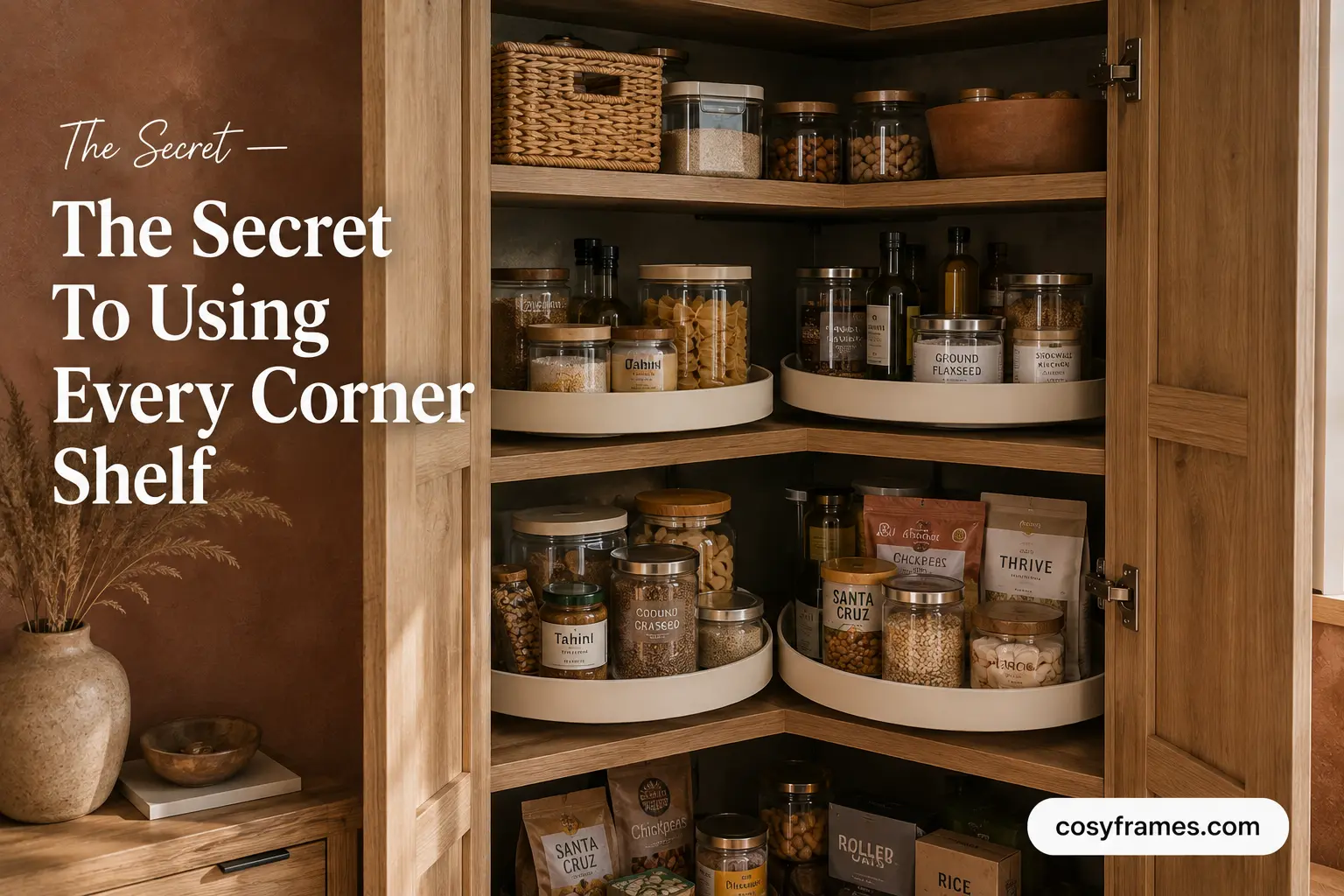
Every kitchen layout has that one awkward, shadowy zone where good groceries go to die. In corner pantries whether a dedicated walk-in cabinet or a deep blind base cupboard that back corner angle is notoriously hard to reach. Cans get pushed into the dark, duplicate bags of rice accumulate, and half your shelf depth ends up completely wasted.
Applying deliberate corner pantry ideas that use every inch transforms awkward 90-degree angles from chaotic storage dumps into highly efficient workhorses. With a few modular adjustments, smart accessories, and strategic lighting, you can make every square inch of shelf space accessible without remodeling your entire kitchen.
The “Black Hole” Effect: Why Kitchen Corners Steal Usable Space
Standard rectangular containers and square bins are designed to sit flush against flat, straight walls. The moment you push a square box into a 90-degree corner shelf, you create two dead zones: triangular empty space behind the box, and restricted access in front of it.
Furthermore, standard shelf depth in a corner pantry often extends past 24 inches at the deepest diagonal. Reaching into that depth forces you to knock over front-row items. To fix this, you must stop treating corners like straight shelves and start using accessories designed around radial movement or pull-out tracks.
9 Practical Corner Pantry Ideas That Use Every Inch
1. Install Oversized Corner Turntables (Lazy Susans)
A standard 9-inch turntable is built for spices, but deep corner cabinets can easily handle 18- to 24-inch heavy-duty turntables. Installing a large rotating tray in the dead center of a deep corner shelf pulls items from the shadowy back right to the front with a single flick of your wrist. Use these for tall, sticky bottles like oils, vinegars, honey, and bulk sauces.
2. Switch to L-Shaped Wrap-Around Open Shelving
If you have a walk-in corner pantry with disconnected shelves that meet awkwardly in the seam, you are losing shelf real estate. Continuous L-shaped shelving eliminates center supports, letting you slide flat items all the way into the angle. Use the seam for items you pull forward together, rather than loose single jars.
3. Use Wedge-Shaped Modular Bins for Deep Angles
Square bins leave triangular air pockets, but wedge-shaped bins are specifically tapered to fit the curved radius of lazy susans and angular shelves. Group your dry snacks, baking powders, or sauce packets into labeled wedge bins. You can pull the entire wedge bin out like a pie slice to grab what you need.
4. Designate the Deep Floor for an Appliance Garage
The lowest corner shelf or the pantry floor has the most weight capacity and the deepest diagonal reach. Instead of packing it with small loose food items that are impossible to reach from standing height, designate the floor corner as an appliance parking station. Stash heavy stand mixers, slow cookers, bread machines, or Dutch ovens here on sliding felt pads.
5. Add Diagonal Pull-Out Wire Basket Drawers
Blind corner cabinets—where half the shelf is hidden behind a door frame—benefit hugely from articulating pull-out hardware. These double-jointed wire baskets slide outward as the door opens, pulling items directly into the kitchen’s ambient light. It completely eliminates crawling on the floor with a flashlight to find canned goods.
6. Use Tiered Corner Racks for Cans and Spices
Vertical tiers let you stack canned beans, tomato pastes, and small jars on tiered bleachers designed to fit snug against a 90-degree corner. By elevating the back rows two to three inches above the front, you can read labels clearly without shifting containers around.
7. Hang Vertical Tension Rods for Baking Sheets
Awkward vertical gaps in corners make excellent dividers for flat items. Install tension shower rods or wood dowels vertically between two corner shelves. Slide cutting boards, cookie sheets, muffin tins, and serving platters on their sides between the rods. They stay upright, organized, and take up very little horizontal depth.
8. Mount Motion-Sensor Puck Lights in Deep Corners
Even the best organizational systems fail if you cannot see inside. Deep corner pantries rarely get natural light from kitchen windows. Stick rechargeable, magnetic, motion-sensor LED light strips or puck lights right above the corner nook. Illuminating the rear wall eliminates the visual hesitation that causes people to leave items forgotten in back rows.
9. The Bulk Refill Zone: Stashing Overflow Goods
Use the hard-to-reach dead angle for things you only need once a month. Store excess paper towels, unopened backstock boxes of pasta, bulk 10-pound rice sacks, or party platters directly in the deepest pocket. Keep daily staples front and center, reserving the deep corner for long-term reserves.
How to Optimize a Blind Corner vs. Walk-In Corner Pantry
Different corner layouts require fundamentally different strategies:
| Corner Pantry Style | Main Storage Challenge | Best Solution |
| Walk-In Corner Closet | Shelves are deep; hard to reach rear center | 18″ to 20″ Lazy Susans + L-shaped seamless shelves |
| Blind Corner Cabinet | Half the storage is completely hidden behind a wall | “Magic Corner” pull-out swing trays or slide-out caddies |
| Diagonal Upper Cabinet | Awkward narrow opening with a deep triangular rear | Tiered 3-step corner risers for spices and small cans |
Common Corner Pantry Mistakes That Waste Space
- Storing Small Jars Individually: Placing single small jars across deep corners makes them impossible to locate. Always corral small items into clear handled bins or onto turntables.
- Ignoring the Vertical Gap: If your shelves have 16 inches of open air between them, single layers of cans waste the top 10 inches. Add stackable wire shelf risers to create two tiers of usable space.
- Using Opaque Storage Baskets: Solid wicker or dark baskets hide ingredients. Use clear acrylic bins or wire baskets so you can see inventory at a glance from across the kitchen.
Keeping Your Corner Pantry Usable All Year
A corner system stays functional when you adhere to a clear-lane policy. Never store loose items directly in front of pull-out tracks or rotating turntables. If the rotation path is blocked by a stray bottle of canola oil, the whole mechanism becomes unusable.
Before restock trips, spend 60 seconds spinning your turntables and pulling forward backstock goods. Knowing what is tucked away in that deep corner prevents duplicate shopping and keeps your pantry running smoothly.
FAQ
What is the most space-efficient way to organize a corner pantry?
The most space-efficient method is installing heavy-duty, large-diameter turntables (lazy susans) paired with wedge-shaped bins. This eliminates deep triangular dead zones and brings stored ingredients directly forward with a simple spin.
How do you organize a corner pantry with deep shelves?
Divide deep shelves into zones: keep high-rotation items on front-facing lazy susans or long, clear pull-out bins with handles. Reserve the deep diagonal rear space for bulk backstock, seasonal bakeware, or heavy appliances on sliding pads.
What should you not store in a deep corner pantry?
Avoid storing small, loose, uncontained items like spice packets, single cans of tomato paste, or small snack bars in corners. They inevitably get pushed into back gaps and forgotten until they expire.
Can you put pull-out drawers in a corner pantry?
Yes. You can install specialty 90-degree diagonal corner drawers, or add articulating “magic corner” pull-out wire units to blind corner cabinets, which slide the back shelf forward into the room when opened.
How do I stop items from falling off the back of corner shelves?
Use bins with high sides, turntables with raised safety rims (at least 1.5 to 2 inches high), or install low shelf-edge lips. These guards prevent containers from tumbling into the dark gap behind the shelving.