


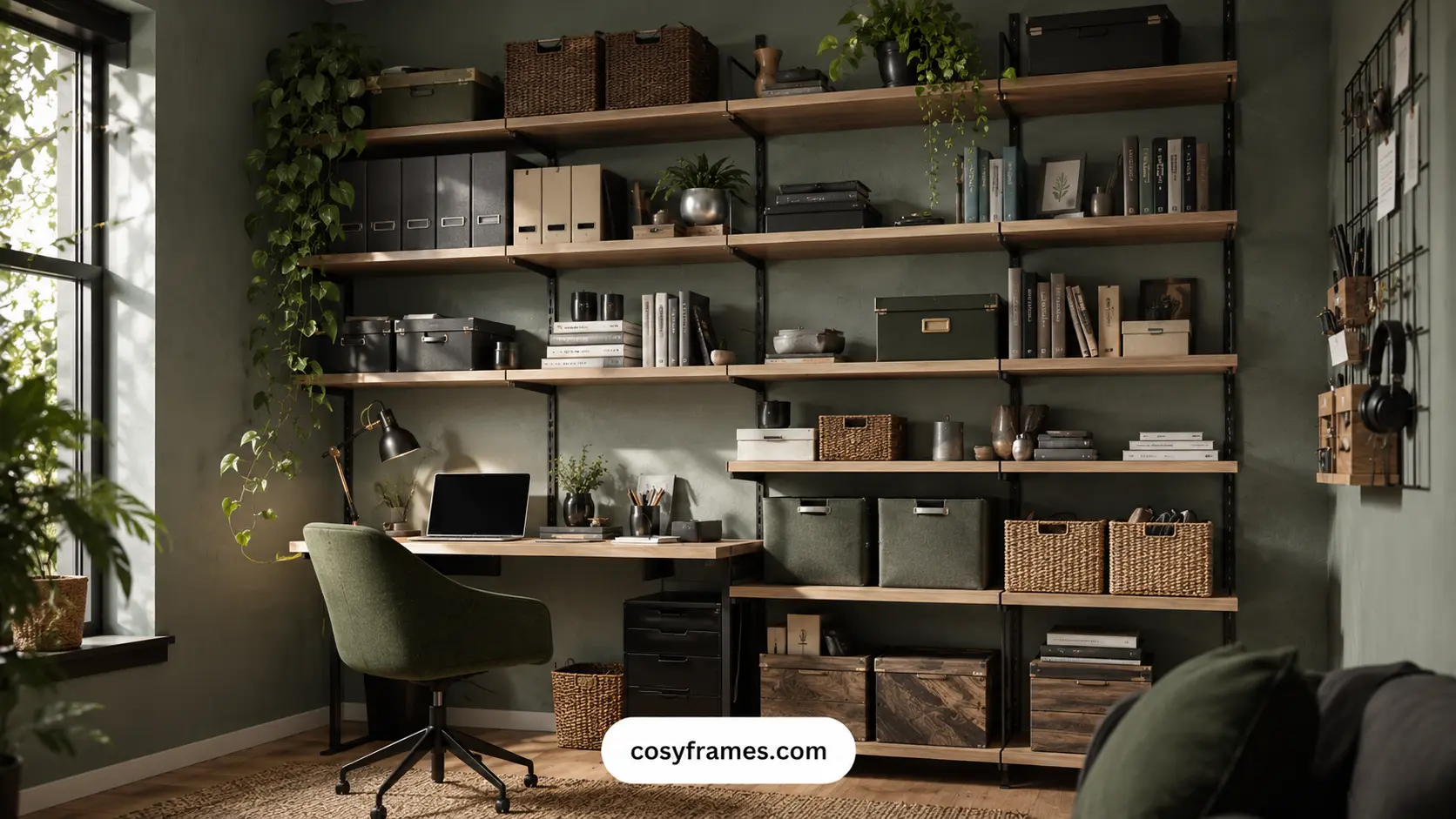
Functional vertical storage ideas for small spaces involve taking advantage of bare wall zones, doorway frames, and ceiling drops without compromising floor walkways. By lifting daily utility items into structured vertical tiers measuring 6 to 10 inches in depth, you eliminate horizontal surface clutter and nearly double your usable capacity in apartments under 500 square feet.
Ceiling-Drop and Upper-Wall Hanging Zones
Most rental layouts leave the upper 24 inches of a standard 8-foot drywall perimeter completely bare. Tapping into this high-elevation zone keeps floors clear while providing long-term homes for seasonal or infrequently used items.
Heavy-Duty Ceiling-Mounted Hanging Rails
Installing an industrial iron pipe rail or heavy steel rod directly into ceiling joists creates hanging capacity where floor space is non-existent.
- Locate ceiling joists using an electronic magnetic stud finder, anchoring into solid wood using 2.5-inch carbon steel lag bolts.
- Suspend the rod 10 inches below the ceiling to clear standard 1.5-inch hanger hooks and utility S-hooks.
- Use heavy-duty metal S-hooks to hold bulky kitchen cookware (such as cast iron pans) or suspend hanging canvas planters, freeing up valuable cabinet bases.
Top-Tier Perimeter Picture Ledges
A standard picture ledge is 3.5 to 4 inches deep, making it narrow enough to sit along high hallway walls without obstructing head clearance.
Position the ledges 14 inches below the ceiling line across an entire wall span. This high ledge stores framed art, small canvas storage baskets, or books in a single row. The slim projection prevents anyone walking through a narrow 36-inch hallway from bumping their shoulders against the unit.
Modular Wall Grids and Track Shelving Systems
Full bookcases consume significant square footage. Open-grid vertical systems offer customizable storage positions while maintaining open sightlines.
Steel Wire Grid Wall Organizers
A 24×30-inch powder-coated wire grid with a 2×2-inch grid spacing provides a versatile vertical workstation.
Hang the grid using four heavy-duty adhesive wall brackets or small steel drywall anchors. Attach hanging wire bins, spring clips, and pencil baskets directly to the wire crossbars. It keeps desk supplies, mail, scissors, and small measuring tools off your work surface while remaining under a 3-inch wall projection profile.
Tension-Pole Floor-to-Ceiling Shelving
When drilling into rental drywall is strictly prohibited, spring-loaded vertical tension poles secure vertical shelving from floor to ceiling.
- Choose anodized aluminum tension poles with non-marking silicone pads rated for ceilings between 7 and 9 feet.
- Attach three to four 8-inch-deep wooden or steel shelf trays along the upper two-thirds of the pole.
- Position the pole assembly in unused corner nooks such as the 18-inch gap between an entertainment unit and a window frame.
Essential Sizing Metrics for Vertical Storage Ideas for Small Spaces
Installing wall hardware without checking clearances leads to blocked pathways and loose mounts. Before purchasing materials, match your dimensions against these parameters:
| Vertical System Type | Ideal Mounting Elevation | Maximum Shelf / Basket Depth | Recommended Hardware | Weight Limit (Safe Working Load) |
| High Perimeter Ledges | 72–78 inches from floor | 3.5 to 4 inches | 2-inch wood screws into studs | 25 lbs per 4-foot run |
| Steel Wire Utility Grids | Eye-level (54–60 inches) | 2.5 to 5 inches | Drywall anchors or heavy-duty strips | 15 lbs total |
| Tension-Pole Vertical Risers | Floor to ceiling (84–108 inches) | 8 to 10 inches | Spring-loaded compression pads | 30 lbs total (balanced) |
| Over-Door Rack Towers | Top of standard 80-inch door | 4.5 to 5.5 inches | Padded top bracket clamps | 40 lbs distributed evenly |
| Floating Surface Ledges | 48–56 inches from floor | 6 to 8 inches | Concealed steel rod brackets | 20 lbs per stud anchor |
Before installing floating shelves, consult the official drywall anchor shear strength ratings to ensure your wall mounts can support the intended load without pulling out of the plasterboard.
Narrow-Profile Vertical Units for Dead Wall Margins
Small living spaces frequently feature awkward structural returns, like the 12-to-15-inch wall strip next to an interior doorway.
Tiered Wall-Mounted Display Shelving
Installing staggered shelves on bare living room walls allows you to pull decor and media collections off low tables. You can organize plants, small speakers, and framed prints vertically by incorporating structured living room wall shelf decor ideas. Keep shelf depth under 8 inches so the furniture pieces underneath remain easily accessible.
For living room consoles or low entry credenzas situated beneath vertical shelving, grouping everyday objects on an organized tray creates clean sightlines. Using targeted travertine tray styling ideas anchors loose items like car keys, sunglasses, and pocket essentials onto a compact, defined stone base.
6-Inch-Deep Vertical Tower Units
Floor space in compact entryways is tight. A standard horizontal shoe bench eats up roughly 3 square feet of floor space while holding just 4 to 6 pairs of shoes.
Swap the bench for a 6-tier vertical shoe tower measuring 11 inches wide, 10 inches deep, and 48 inches tall. Stacking pairs vertically stores 12 pairs in less than 1 square foot of floor real estate. Secure the top bracket with a zero-damage safety strap to prevent tipping on carpets.
Interior Door Perimeter and Frame Maximization
Standard interior doors feature empty perimeter frames that are often overlooked.
Mount a full-height hanging utility system directly over bathroom or utility doors using padded top brackets that fit a standard 1-3/8-inch door leaf. For comprehensive room-wide setups, pairing door units with small apartment storage solutions lets you double closet drops and use under-bed clearances alongside vertical wall tracks.
Check the standard interior door clearance specifications to ensure your hanging brackets do not rub against the door jamb or compromise the latching bolt when the door is closed.
FAQ
How do I install vertical storage in an apartment without damaging walls?
Use heavy-duty spring-loaded tension poles, over-the-door clamping racks, and adhesive wall hooks rated for 5 to 16 lbs. These systems provide sturdy multi-tier storage without drilling into drywall or risking your security deposit.
What is the ideal shelf depth for a narrow small-space hallway?
Keep shelf depth between 3.5 and 6 inches. Any shelf exceeding 6 inches in depth reduces walking clearance in a standard 36-inch hallway and increases the risk of bumping shoulders or elbows.
How much weight can a vertical tension pole organizer support?
Most residential carbon-steel or aluminum tension poles support 30 to 40 lbs of evenly distributed weight. Place heavier items, such as books or large bottles, on the lower baskets to keep the center of gravity stable.
Can I use vertical storage systems on drywall without wall studs?
Yes, but you must use self-drilling metal drywall anchors or toggle bolts. A toggle bolt supports 30 to 50 lbs in 1/2-inch drywall, whereas standard plastic friction plugs should not carry loads over 10 lbs.
What vertical storage works best in a tiny rental bathroom?
An over-the-toilet steel shelving unit with a vertical clearance of at least 34 inches above the tank lid adds three storage tiers. Alternatively, install a floor-to-ceiling corner tension caddy inside the shower enclosure.