


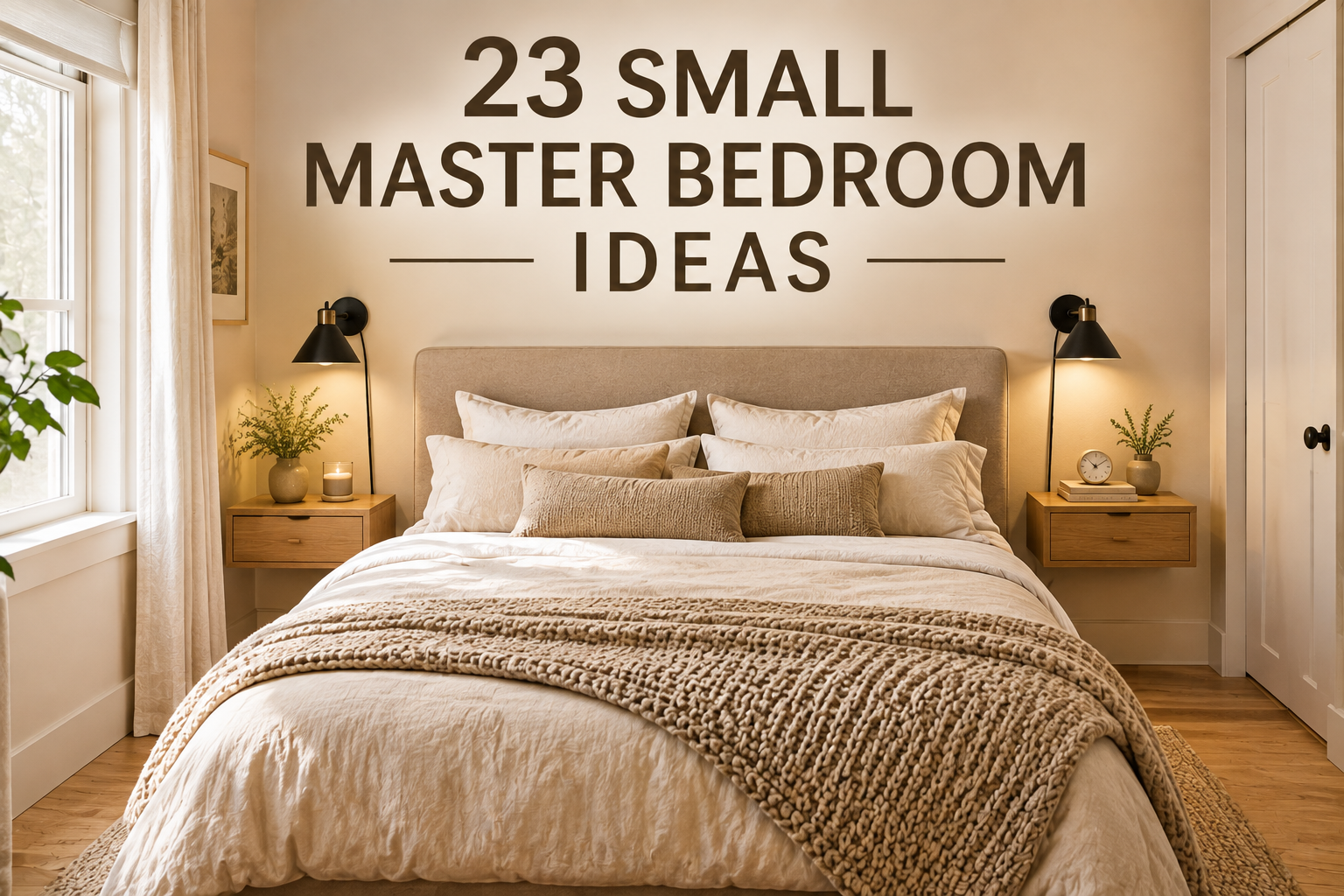
Looking for practical small master bedroom ideas that do not compromise on comfort or everyday function? Having a compact primary bedroom does not mean settling for a cramped layout. With deliberate space planning, clever vertical storage, and thoughtful textile layering, you can make a modest master bedroom feel tailored, calm, and organized.
Whether you are decorating a tight rental apartment or optimizing a smaller home layout on a budget, these realistic techniques will help you maximize every square foot.
Core Rules for Designing a Compact Primary Bedroom
Before choosing paint colors or furniture, follow these basic design rules to prevent visual clutter.
Maximize Floor Visibility to Create Visual Space
The more continuous flooring your eye can see, the larger the room feels. Heavy, boxy furniture that sits directly on the ground breaks up the floor plan and makes tight walkways look crowded. Choose bed frames, dressers, and armchairs with slim, raised legs that let light pass underneath.
The Power of Scale: One Large Piece vs. Multiple Small Items
A common mistake in small spaces is filling the room with several tiny tables, small plant stands, and miniature art frames. This creates visual noise. Instead, anchor the room around one substantial bed frame and balance it with clean, functional storage.
23 Small Master Bedroom Ideas for Every Budget
1. Install Floating Wall-Mounted Nightstands\
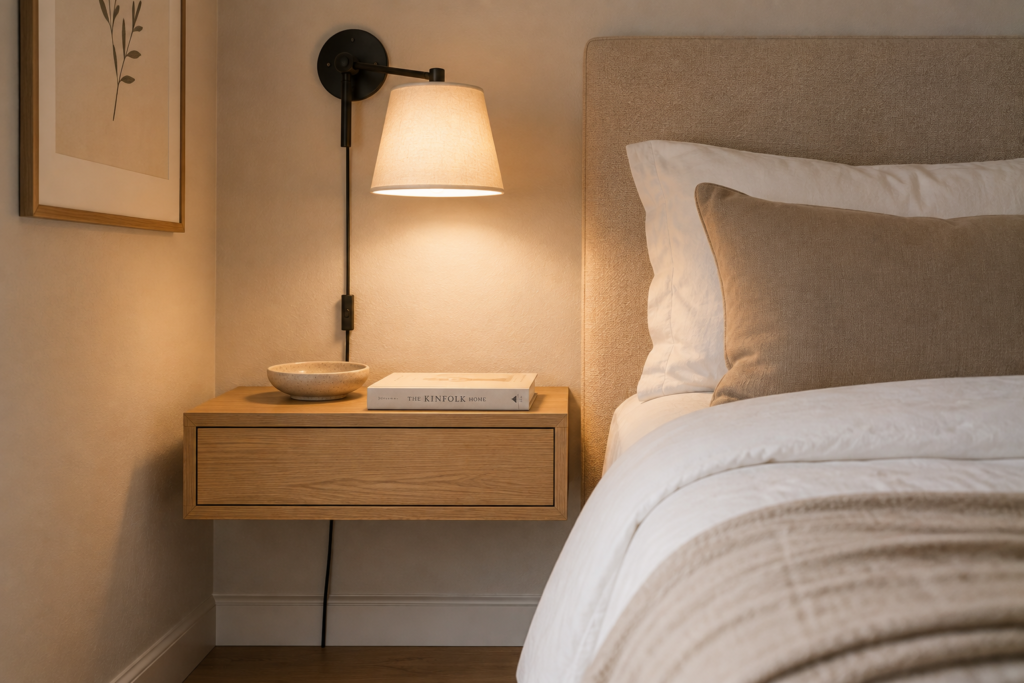
Bulky bedside tables with four legs eat up floor real estate. Swap them for wall-mounted floating shelves or drawer units with minimal depth (10 to 12 inches). This frees up the floor below for slippers or a low storage basket.
2. Hang Plug-In Sconces to Free Up Surface Area
Table lamps take up almost half the usable surface on small nightstands. Install plug-in wall sconces with swing arms roughly 20 to 24 inches above your mattress height to keep your tabletop clear for a water carafe and a book.
3. Use an Architectural High-Profile Headboard
A tall, vertical headboard draws the eye upward, emphasizing the height of the room rather than its narrow width. Choose an upholstered linen or channel-tufted headboard in a light, neutral fabric to soften the wall.
4. Anchor the Layout with a Flatweave Area Rug
A small rug makes a compact bedroom feel fragmented. To get the proportions right, follow our bedroom rug size guide so your floor covering extends at least 18 to 24 inches past the bed frame without running flush against baseboards.
5. Mount Drapery Tracks Near the Ceiling Line
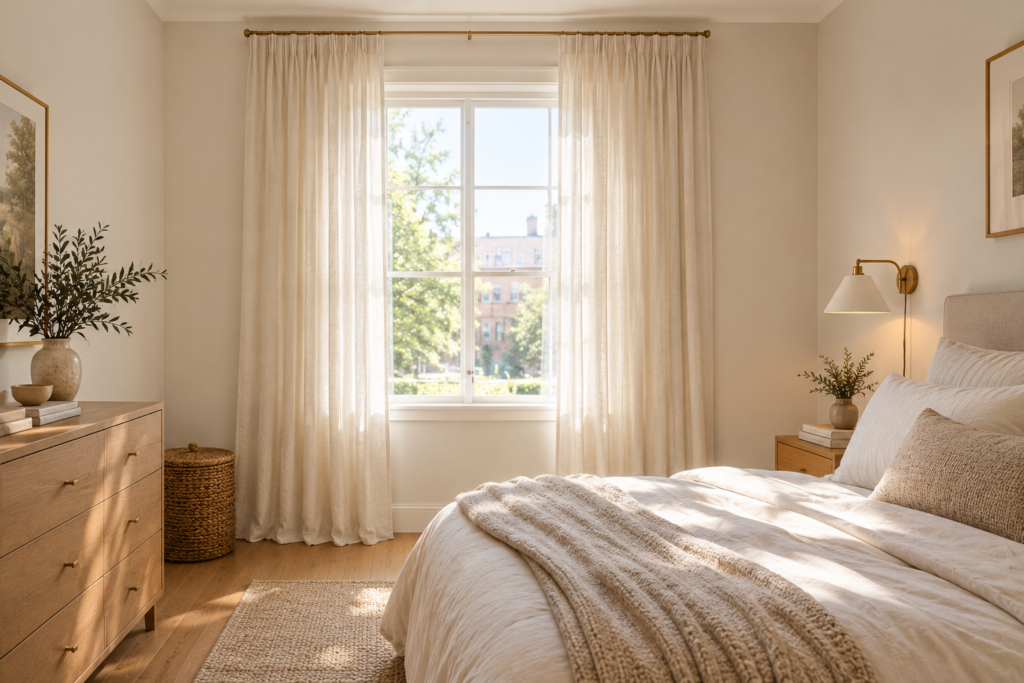
Install your curtain rods 2 to 4 inches below the ceiling rather than right above the window casing. Let floor-length linen drapes pool slightly on the floor. This vertical line tricks the brain into perceiving higher ceilings.
6. Choose a Low-Profile Platform Bed Base
In rooms with standard or low ceiling heights, a bulky box spring lifts your mattress too high, dominating the room. A low-profile platform bed keeps the center of the room open and airy.
7. Use a Tone-on-Tone Color Scheme
Paint walls, trim, and closet doors in similar shades of warm white, oatmeal, or light greige. When walls and woodwork share a tonal palette, hard visual breaks disappear, making room boundaries feel expansive. For texture pairing tips, see our collection of cozy neutral bedroom ideas to balance light shades naturally.
8. Hang an Oversized Leaner Mirror Opposite the Window
Position a thin metal-framed full-length mirror across from or adjacent to your primary window. The glass reflects exterior daylight deep into the shadows, brightening dark corners during the day.
9. Hide Clutter with Tailored Under-Bed Drawers
If your room lacks space for a wide dresser, utilize the empty footprint beneath your bed frame. Use fabric-covered rolling storage bins or a hydraulic lift-up bed frame to store off-season clothing cleanly out of sight.
10. Install Picture Ledges Above the Headboard
Instead of drilling multiple holes for a heavy gallery wall, mount a single shallow oak picture ledge above your bed. You can rotate framed art prints and small ceramics without cluttering bedside tables.
11. Add Removable Box Moulding with Peel-and-Stick Trim
Renters can add classic architectural detail to plain drywall using lightweight, removable polystyrene wall trim. A simple picture-frame moulding layout adds shadow lines and texture without taking up a single inch of floor space.
12. Switch to Warm 2700K Low-Profile Ceiling Lighting
Avoid heavy hanging chandeliers that drop too low into your walkway. Choose a flush-mount or semi-flush fixture with a fabric shade and install warm-white 2700K LED bulbs for a soft, calming evening atmosphere.
13. Use Slim, Open-Legged Accent Furniture
If you need a small stool or accent chair for getting ready, choose a piece with slender metal or light wood legs. Being able to see the floor through the furniture base keeps the room feeling spacious.
14. Keep Bedside Styling Minimalist (The 3-Item Rule)
Limit nightstand surfaces to three functional, aesthetic items: a small stoneware tray, a carafe or small clock, and a single stem vase. Clear surfaces create an immediate sense of order.
15. Create a Seamless Built-In Look with Wardrobes
If your master bedroom lacks a walk-in closet, place two minimalist flat-panel wardrobes against one wall. Adding top infill panels up to the ceiling gives them an intentional, built-in appearance that hides clothing clutter completely.
16. Use Continuous Flooring Without Clashing Dividers
Keep flooring materials consistent from the bedroom into the hallway. Using one continuous tone creates a smooth transition that makes adjoining rooms feel like a unified, larger suite.
17. Swap Bulky Dressers for Vertical Tallboy Chests
A standard 6-drawer horizontal dresser takes up 50 to 60 inches of horizontal wall space. Replace it with a 5-drawer vertical tallboy chest, which offers comparable drawer volume with a much smaller 30-inch footprint.
18. Choose Rounded Edges to Soften Walkways
In tight clearance pathways around the bed, sharp furniture corners cause stubbed toes and visual rigidity. Look for nightstands, storage benches, and mirrors with curved or softened oval edges to improve flow.
19. Hang Matching Monochrome Art in Sets of Two
Two matching large frames with wide white mats look more intentional and orderly than a scattered collection of small frames. Stick to minimalist line art or desaturated landscape sketches.
20. Introduce Natural Wood Tones to Ground Light Colors
Add warmth to white and cream walls by introducing honey oak or walnut finishes on your headboard or dresser top. The organic wood grain grounds the room without relying on dark, heavy wall paint.
21. Layer Woven Roman Shades with Sheer Curtains
Pairing inside-mount textured bamboo or fabric Roman shades with light outer drapes provides dual functionality: complete light control for sleep and soft, diffused natural lighting during the day.
22. Mount a Fold-Down Floating Vanity Desk
If you need a dedicated makeup or laptop space, install a shallow wall-mounted drop-leaf desk. When closed, it projects only 6 inches from the wall, keeping the walkway clear.
23. Add Touch-Sensor LED Strips Behind the Headboard
Adhere a warm-white LED strip behind your headboard panel pointing upward. The indirect glow washes the wall in soft, warm light at night, eliminating harsh glare before bedtime.
Space-Planning Layouts for Small Master Bedrooms
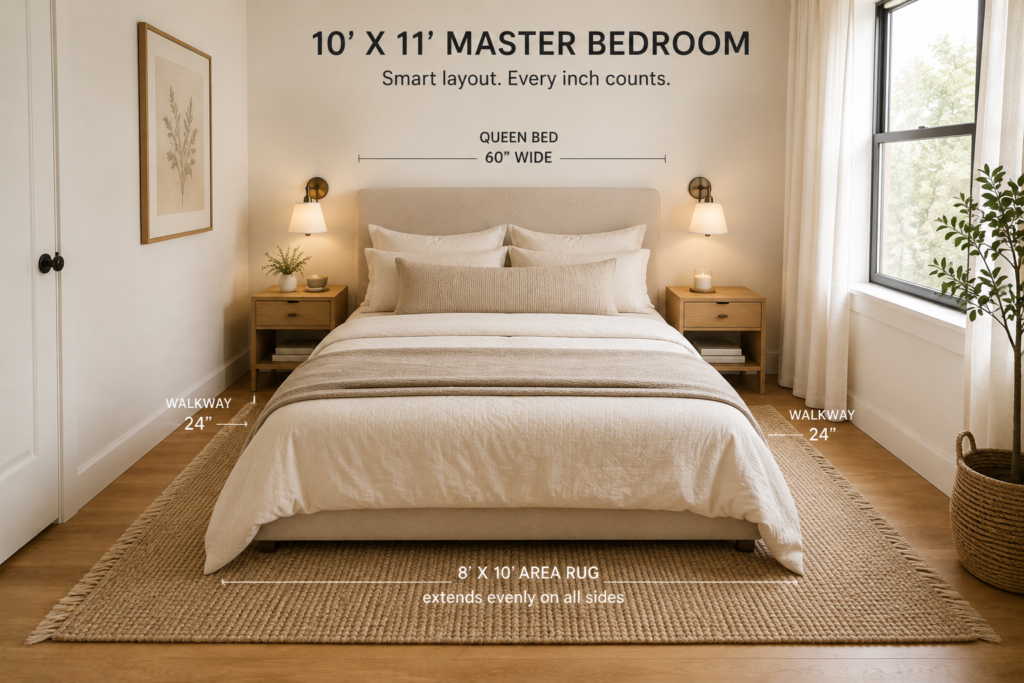
The Centered Bed Layout (Balanced & Symmetrical)
- Best for: Square rooms (at least 10×10 feet).
- Setup: Place the headboard centered against the longest solid wall. Place two slim 14-inch nightstands on either side.
- Benefit: Gives both partners equal access to the bed and preserves balanced walking paths.
The Offset Layout (For Rooms with Closet/Door Obstacles)
- Best for: Narrow rectangular rooms or rooms where closet swing doors block one side.
- Setup: Shift the bed closer to one wall (leaving 18 inches of clearance) to allow a full 36-inch walkway on the active closet side. Use a single floating shelf on the tighter side.
Rental-Friendly Ways to Upgrade a Small Master Bedroom
- Use Tension Rods for Closet Curtains: Remove heavy bifold closet doors that swing out into your bed clearance and replace them with a neutral linen drape on an interior tension rod.
- Adhesive Cord Covers: Route plug-in wall sconce cords neatly down to the outlet using paintable, damage-free adhesive tracks.
- Command Picture Ledges: Mount lightweight canvas art and thin wood ledges using heavy-duty adhesive strips to avoid drywall damage.
According to The Carpet and Rug Institute keeping low-pile textiles clean and well-maintained helps maintain indoor air quality in compact bedrooms with limited ventilation.
4. FAQ SECTION
Frequently Asked Questions
Can a King-size bed fit in a small master bedroom? Yes, but only if the room measures at least 10×12 feet. In this setup, choose slim floating nightstands and a low-profile headboard to leave at least 24 inches of walking space around the perimeter of the bed.
How do you make a small master bedroom look expensive on a budget? Focus on simple, high-impact details: hang curtain rods right below the ceiling line, use warm 2700K lighting, hide cords in paintable adhesive covers, and stick to a cohesive, calm color palette of warm whites, oak, and textured linen.
What colors make a small master bedroom look larger? Light, reflective colors with warm undertones—such as soft cream, warm alabaster, light taupe, and pale greige—reflect light and eliminate hard shadow lines that delineate small corners.
Where should the bed be placed in a small bedroom? Position the headboard against the longest unbroken wall. Avoid placing the mattress directly in front of the door swing or blocking low window sills if alternative wall space exists.
How do I add storage to a small bedroom without crowding it? Use vertical wall space: choose tall 5-drawer chests instead of wide dressers, utilize rolling under-bed storage containers, and mount floating shelving above door frames or high on empty walls.