


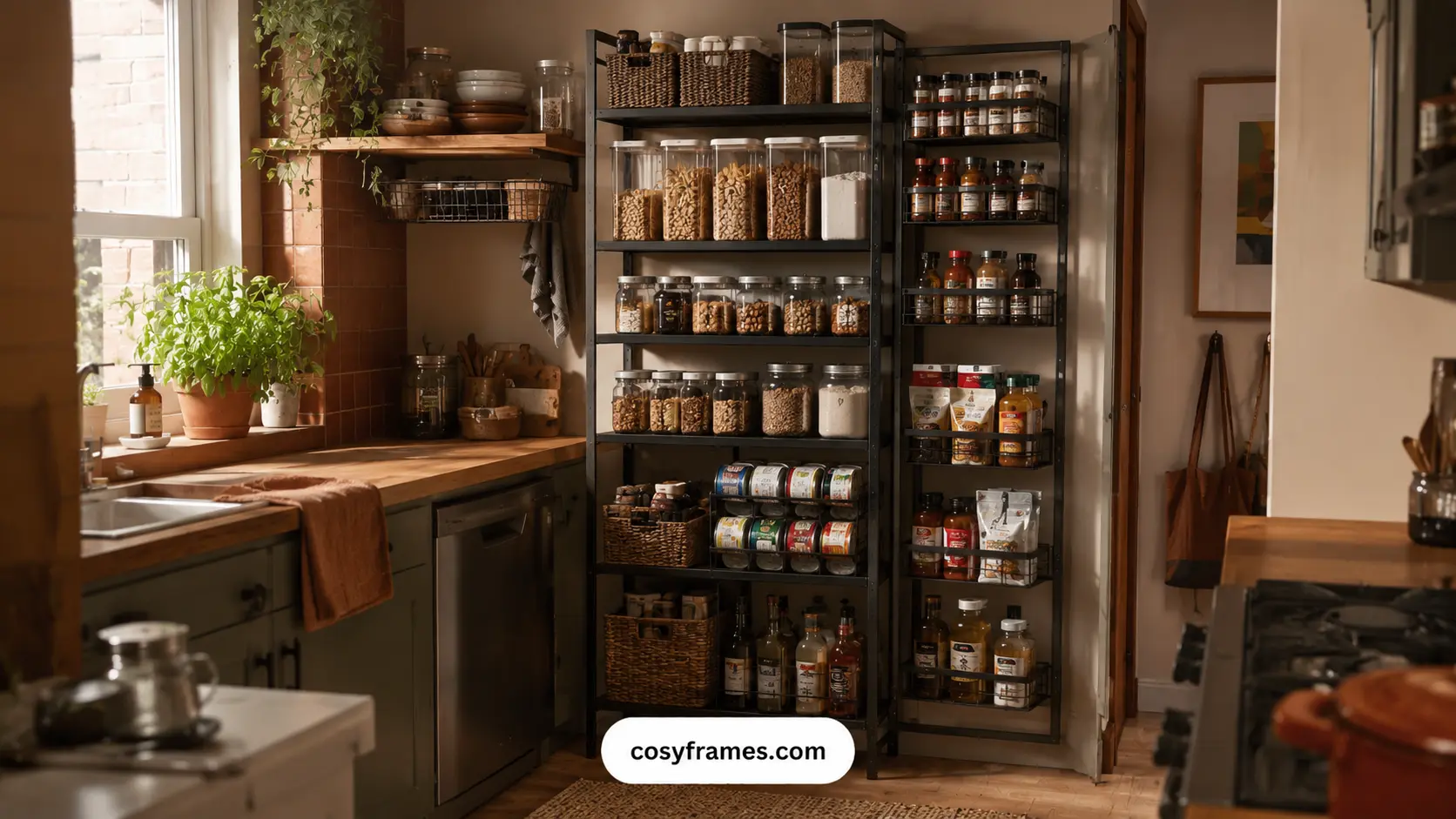
Functional small kitchen pantry ideas for limited storage rely on reclaiming dead cabinet vertical space, utilizing narrow appliance gaps, and standardizing container footprints to prevent wasted shelf volume. By introducing pull-out acrylic sliding drawers, expandable wire shelf risers, and slender rolling carts, you can double your dry food capacity in a compact apartment kitchen without altering your cabinetry or losing your rental deposit.
Repurposing Vertical Gaps and Floor Margins
Most rental kitchens lack a dedicated walk-in pantry closet. Creating practical storage starts with identifying unused negative space around major appliances and doors.
The 6-Inch Refrigerator Gap Rolling Cart
The narrow gap between a standard refrigerator and an adjoining wall or base cabinet is often wasted. That 6-to-8-inch opening provides ample vertical volume for canned goods, oils, and dry grains.
- Measure the floor-to-counter height and the width of the gap; standard clearances range from 5 to 7.5 inches.
- Choose a 4-tier rolling cart constructed from powder-coated carbon steel or food-safe polypropylene measuring 5 inches wide by 21 inches deep.
- Keep 28-ounce crushed tomato cans and 1-liter olive oil bottles on the bottom two tiers to maintain a low center of gravity when sliding the unit over tile joints.
Track-Mounted Over-Pantry-Door Steel Baskets
If your kitchen includes a narrow utility door or standard cupboard doors, door-mounted storage relieves shelf congestion immediately.
Install an adjustable vertical steel track system hooked over the door leaf with silicone-padded brackets. Ensure the baskets do not exceed 4.5 inches in depth so they clear your internal cabinet shelves when the door swings shut. Line wire baskets with 1mm polypropylene liners to prevent narrow salt shakers and extract bottles from falling through the wire grids.
Maximizing Shelf Elevation Inside Deep Cabinets
Standard builder-grade kitchen cabinets leave 12 to 14 inches of vertical clearance between fixed shelves. Stacking soup cans or spice bottles directly on top of each other creates clutter that quickly tips over.
Tiered Acrylic Risers and Undermount Baskets
Single rows of dry goods leave the upper half of your cupboard shelves empty. Wire and acrylic shelf inserts create immediate second tiers.
- Slide expandable 2-tier wire or acrylic shelf risers (expanding from 14 to 26 inches wide) along the back wall to display canned goods like stadium bleachers.
- Clip vinyl-coated steel undermount wire baskets directly onto existing 3/4-inch cabinet shelves to store lightweight items such as foil boxes, tea towels, or snack pouches in previously unused overhead air space.
- For more ways to take advantage of dead air space in compact floor plans, applying modular vertical storage ideas for small spaces lets you move dry goods and everyday items out of crowded walkways and onto secure vertical tiers.
10-Inch Turntables for Corner Dead Zones
Blind corner cabinets and deep pantry shelves often hide half-used spice bags and baking soda boxes in the dark corners.
Place a 10-to-11-inch clear acrylic turntable (Lazy Susan) with a non-skid silicone base on the shelf. Spin bottles smoothly to bring back-row vinegar bottles and seasoning jars straight to the front with one flick. Ensure the turntable features a 1.5-inch raised outer rim to prevent glass bottles from sliding off during rotations.
Essential Sizing Metrics for Small Kitchen Pantry Ideas for Limited Storage
Measuring shelf clearances before buying pantry bins prevents loose organizers and doors that will not latch. Compare your measurements with these standard kitchen dimensions:
| Pantry Storage Tool | Ideal Depth & Width | Required Vertical Clearance | Recommended Weight Capacity | Primary Material |
| Slim Gap Cart | 5.2″ W × 21″ D | Minimum 32″ floor clearance | 15 lbs per tier | Carbon steel / ABS plastic |
| Over-Door Rack | 4.5″ Basket Depth | 5″ clearance behind door face | 35 lbs total load | Powder-coated wire |
| Cabinet Shelf Riser | 8″ D × 14–26″ W | 12″ to 14″ interior cabinet height | 20 lbs distributed | Solid acrylic or coated steel |
| Modular Canister Set | 4″ × 4″ or 6″ × 6″ base | 4″, 8″, or 12″ vertical stacks | N/A (stackable latch lids) | BPA-free plastic / Borosilicate |
| Slide-Out Basket | 14″ to 18″ deep | 7″ to 9″ shelf drop | 25 lbs on ball-bearing rails | Chrome-plated steel |
To ensure that hanging door racks and adhesive bins do not exceed safety limits or leave wall residue, check the official 3M Command adhesive weight ratings before loading pantry supplies onto rental surfaces.
Decanting Systems: Uniform Container Footprints
Store-bought boxes and bags arrive in mismatched sizes that waste shelf space and obscure inventory. Decanting staples into matching rectangular bins eliminates air gaps between goods.
Square Modular Stackable Canisters
Round glass jars create wasted gaps between their curved perimeters. Modular square or rectangular containers with flat lids interlock cleanly, fitting flush against cabinet side panels.
- Select 0.5-liter, 1.3-liter, and 2.1-liter containers sharing the identical 4×4-inch or 6×6-inch lid profile.
- Assign 2.1-liter canisters to 5-pound bags of flour or rice, stacking two 0.5-liter containers on the adjacent shelf to fill the exact same height profile.
- Use airtight silicone-gasket lids with mechanical clamp locks to keep moisture out of dry grains while maintaining consistent stack heights.
Narrow Pull-Out Storage Drawers
Deep 24-inch base cabinets make it difficult to reach items in the back without removing everything in front. Sliding storage systems provide smooth access to deep items.
Slide clear acrylic pull-out drawers (16 to 20 inches deep by 6 inches wide) directly onto fixed pantry shelves. Use these to store small pouches, baking supplies, or bullion cubes. For whole-home consistency across small layouts, review comprehensive small apartment storage solutions to coordinate your under-bed bins, closet doublers, and deep cabinet systems.
Before purchasing sliding hardware or modifying interior shelves, refer to standard kitchen cabinet dimension guidelines to confirm your face frames clear the drawer slides.
Surface Zoning and Countertop Pantry Stations
When cupboard shelves run out of room, narrow countertop perimeters can handle overflow ingredients without creating visual clutter.
Dedicate an 11×14-inch zone next to the prep station for everyday cooking oils, kosher salt crocks, and pepper grinders. Unifying these loose bottles on a durable stone or wood base instantly separates prep tools from food clutter. You can discover balanced layouts using travertine tray styling ideas to arrange daily oil cruets and small spice cellars cleanly within an exact decorative perimeter.
FAQ
How do I build pantry storage in a kitchen without a pantry?
Assemble an over-the-door steel basket rack on your utility or closet door, slide a 5-inch-wide rolling cart into the refrigerator gap, and insert expandable shelf risers inside upper cabinets to double horizontal storage space.
What are the best containers for a small pantry?
Modular, square-base airtight containers made from clear BPA-free polypropylene or borosilicate glass are best. Square designs sit flush against cabinet walls, eliminating the wasted circular gaps created by traditional round jars.
How do you prevent canned goods from cluttering deep cabinets?
Install a 3-tier stadium-style acrylic can riser or use a front-loading gravity-feed wire can dispenser. These let you see expiration dates and labels across back rows without having to move front cans.
Can I install pull-out pantry drawers in a rental?
Yes. Use tension-fit slide-out wire baskets or non-slip acrylic drawer units that rest directly on top of existing wooden shelves without requiring screw anchors or wall brackets.
What is the ideal shelf spacing for small pantry cabinets?
Allow 7 to 8 inches of vertical height for standard canned goods and jars, and 12 to 14 inches of height for cereal boxes, oil bottles, and modular flour canisters.