


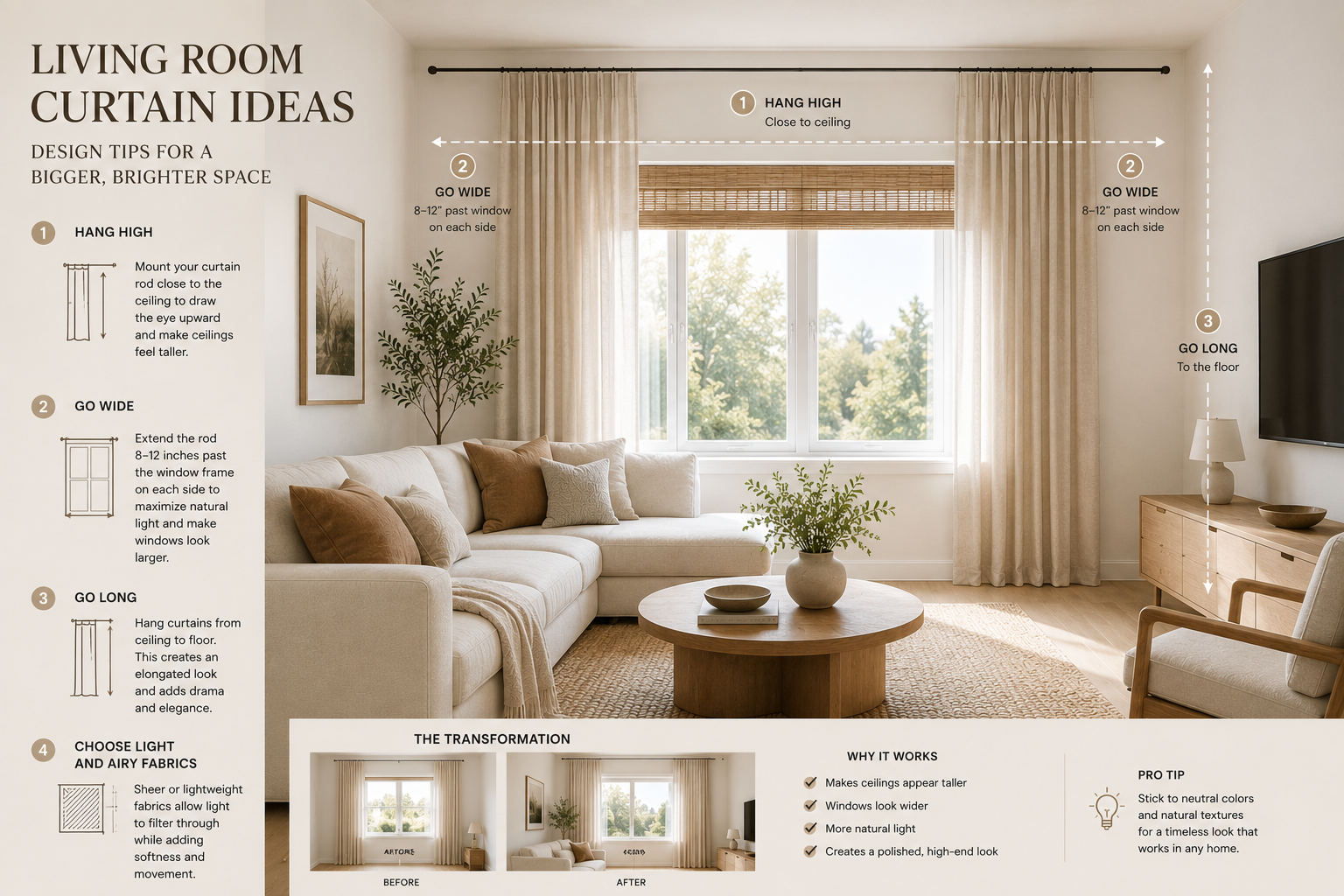
Exploring intentional curtain ideas for living room windows is often the single most effective way to turn an echoing, cold lounge into an inviting retreat. Bare window glass creates flat glare and makes ceilings feel low, while thoughtfully styled drapery frames natural daylight, adds vertical height, and introduces tactile texture.
The difference between basic store-bought panels and a high-end designer setup comes down to proper rod placement, tailored header pleats, and balanced fabric fullness. According to the Window Coverings Association of America, properly fitted residential drapery acts as a vital architectural layer that protects interior upholstery from solar UV damage while regulating indoor ambient comfort.
The Core Rules: The High and Wide Hanging Formula
Before drilling brackets or ordering custom lengths, follow these three foundational installer rules to make your windows appear expansive:
- Mount 4 to 6 Inches Below the Ceiling Line: Never install curtain hardware directly against the top edge of the window molding. Mounting your rod close to the ceiling draws the eye upward and visually elongates your walls.
- Extend Hardware 8 to 12 Inches Past the Frame: Make sure your rod extends well beyond the window casing on both sides. When curtains are drawn open, the fabric stacks against the wall rather than blocking the glass, letting maximum natural daylight pour in.
- Nail the Floor Kiss Hemline: Curtains that stop several inches above the floor look awkward and visually chop up the wall. Aim for a clean “kiss” hemline where the bottom edge barely brushes the floorboards, or allow a 1-inch break for a soft drape.
To coordinate your window textiles with your floor accents, match your fabric tones using our bedroom rug size guide and combine textures with our cozy neutral bedroom ideas for a unified look across your home.
5 Inspiring Curtain Ideas for Living Room Spaces
1. Tailored Pinch-Pleat Washed Linen Panels
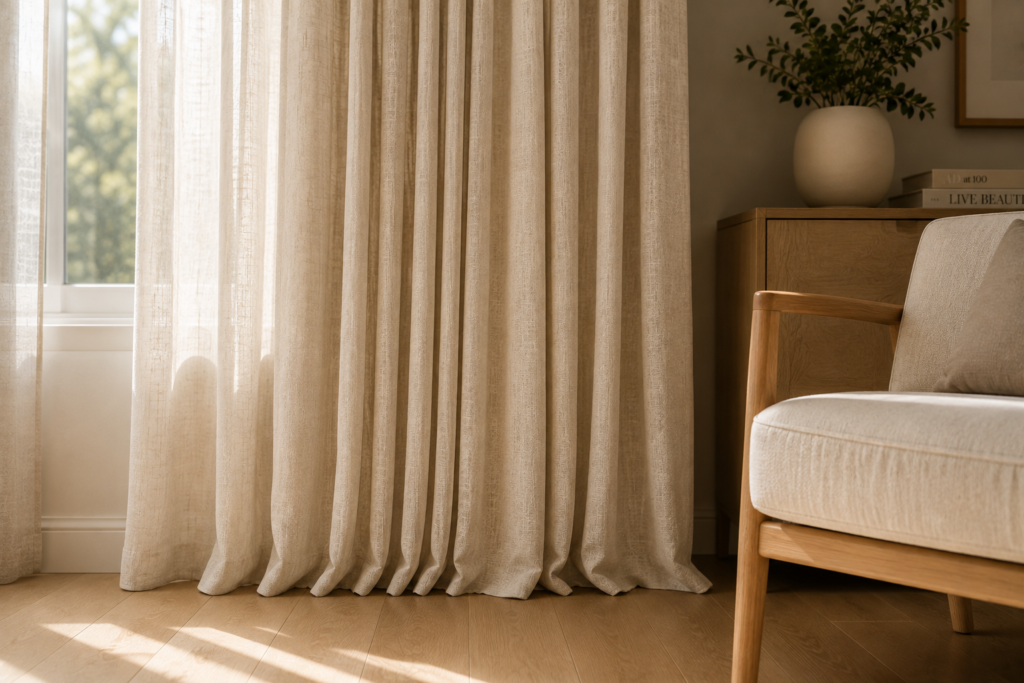
Replace casual grommet tops or basic pocket headers with structured double or triple pinch pleats. Medium-weight European linen provides a relaxed, breathable drape that filters bright sunlight into a warm, gentle glow while maintaining clean vertical lines.
Pro Tip: Choose drapes with sewn-in corner weights at the bottom hem. These small weights keep linen panels hanging straight down without flaring outward at the edges.
2. Layered Natural Bamboo Shades with Side Drapery
Pairing hard and soft textures creates rich visual depth. Mount a textured woven bamboo or jute Roman shade inside the window casing, then frame the outer sides with flowing linen panels to soften the edges of the window frame.
For complementary wall-mounting layouts that tie in with textured window frames, explore our bedroom wall decor ideas for balanced frame styling.
3. Modern Concealed Ceiling Ripplefold Tracks
If your living room has low ceilings or expansive sliding glass doors, install a slim ceiling-mounted track. Ripplefold drapery systems maintain consistent S-curve waves that glide smoothly across large glass spans without catching, making them one of the cleanest curtain ideas for living room architecture.
4. Tone-on-Tone Wall-Matched Drapes for Compact Spaces
In smaller living rooms, contrasting dark curtains can visually chop up the wall plane. Choosing curtain panels in the exact same hue as your wall paint—such as warm alabaster drapes against ivory walls creates an uninterrupted, wrap-around envelope that makes the entire room feel expansive.
If you are styling side lighting near your window nooks, review our advice in bedroom lighting ideas to ensure table lamps do not cast harsh shadows against thick drapery.
5. Double-Track Systems Combining Sheers with Blackout Panels
A dual-track setup provides complete control over privacy and daylight. Hang lightweight gauzy sheers on the inner track to filter daylight and block street views during the day, framed by heavier blackout-lined drapes on the outer track for evening movie nights.
To style decorative elements on accent tables adjacent to flowing curtains, reference our curated nightstand styling ideas for balanced object grouping tips.
Common Window Styling Traps to Avoid
- Choosing Panels That Are Too Short: Curtains hanging several inches above the baseboards shrink the room and make window treatments look like an afterthought.
- Skimping on Fullness: A single flat panel stretched across a window looks thin. Ensure your total combined panel width measures 2 to 2.5 times the width of the window frame.
- Using Bulky Ornate Finials: Oversized decorative end caps crowd wall corners and distract from clean furniture lines. Choose slim end caps or clean French return rods that curve directly into the wall.
Summary: Framing Your Living Space with Warmth
Executing the right curtain ideas for living room layouts comes down to mounting hardware high and wide, selecting tactile natural fabrics, and ensuring hemlines brush the floor. By layering light-filtering sheers with textured outer panels, you create an inviting, balanced space that feels effortlessly finished.
4. FREQUENTLY ASKED QUESTIONS
What are the best curtain ideas for living room spaces with low ceilings?
Hang a concealed ceiling track with ripplefold linen drapes running from ceiling to floor. This eliminates the visual break of a standard curtain rod and creates a continuous vertical line that makes low ceilings appear significantly taller.
How high should I hang curtain ideas for living room windows?
Mount your curtain rod approximately 4 to 6 inches below the ceiling line or crown molding rather than right above the window frame. This draws the eye upward and gives the entire room a grander feel.
How wide should curtain ideas for living room drapery panels be?
For a full, tailored look when closed, your combined curtain panels should measure between 2 and 2.5 times the width of the window frame. For an 80-inch wide window, your total drapery panel width should equal at least 160 to 200 inches.
What fabric works best for curtain ideas for living room decor?
Medium-to-heavyweight linen and linen-cotton blends are the most versatile options. They offer a refined natural drape, allow soft daylight to filter through, resist static cling, and hold up well over years of daily use.