


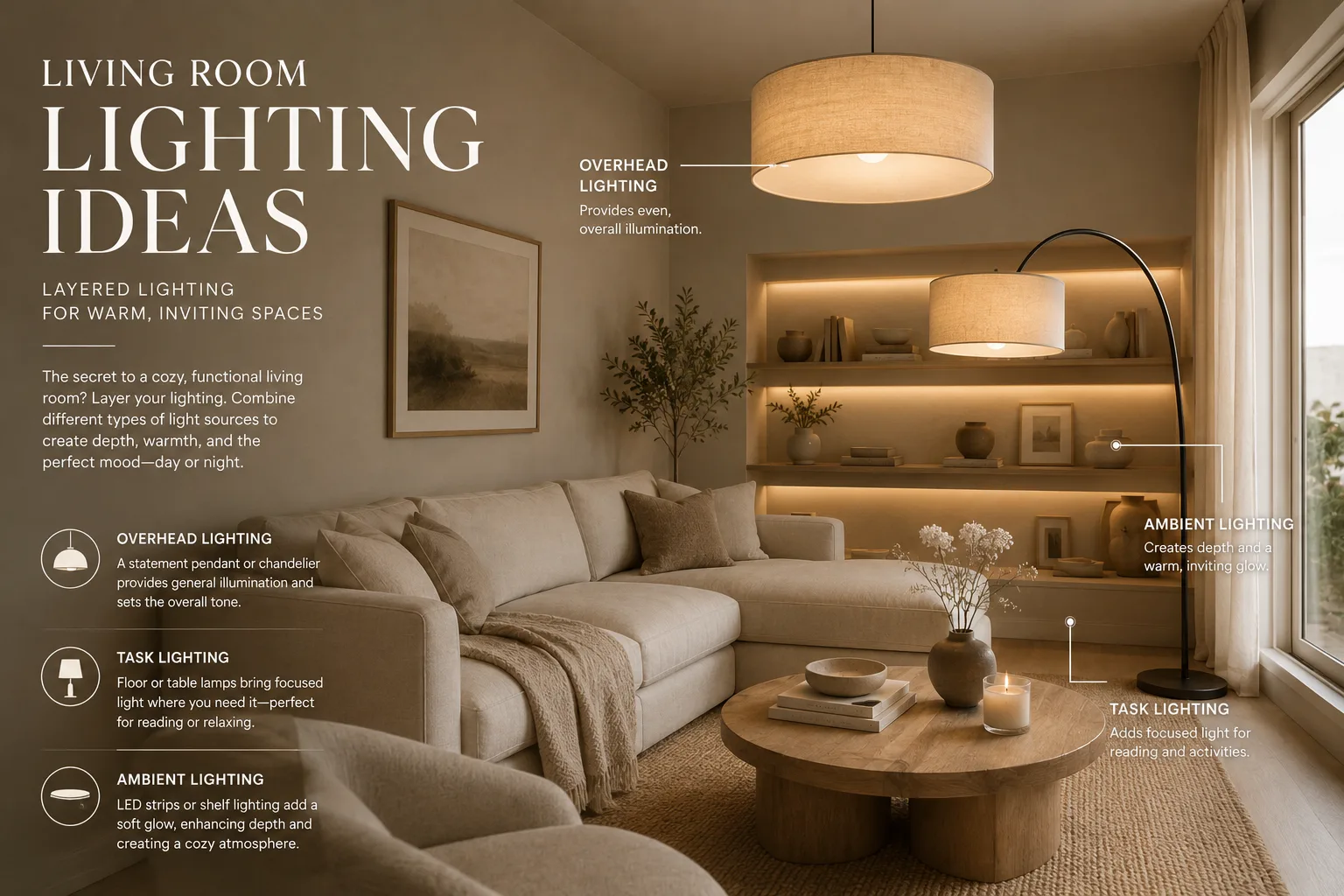
Finding the right living room lighting ideas is the single fastest way to transform a flat, uninspired room into an inviting sanctuary. A single overhead ceiling light leaves harsh shadows and cold corners, while intentional lighting design creates distinct zones for reading, entertaining, and winding down.
Creating a balanced scheme requires orchestrating fixtures to work harmoniously across different levels of the room. According to the Illuminating Engineering Society, standard residential living areas require 10 to 20 lumens per square foot for ambient relaxation, scaling up to 30 to 50 lumens for task-intensive areas.
The Fundamental Rule: The Three-Layer Formula
Before choosing individual fixtures, divide your lighting plan into three distinct layers:
- Ambient Layer: The foundational base that replaces daylight. This comes from recessed cans, central pendants, or cove lighting.
- Task Layer: Direct, focused illumination for functional activities such as reading on the sectional or playing board games.
- Accent Layer: Highlighting architectural features, artwork, or textured wall surfaces to create depth and eliminate dark corners.
To coordinate your lighting with surrounding textures, pair your scheme with insights from our bedroom rug size guide and warm accents from our cozy neutral bedroom ideas for a cohesive whole-home aesthetic.
11 Creative Living Room Lighting Ideas for Every Space
1. Oversized Arc Floor Lamp for Low-Ceiling Definition
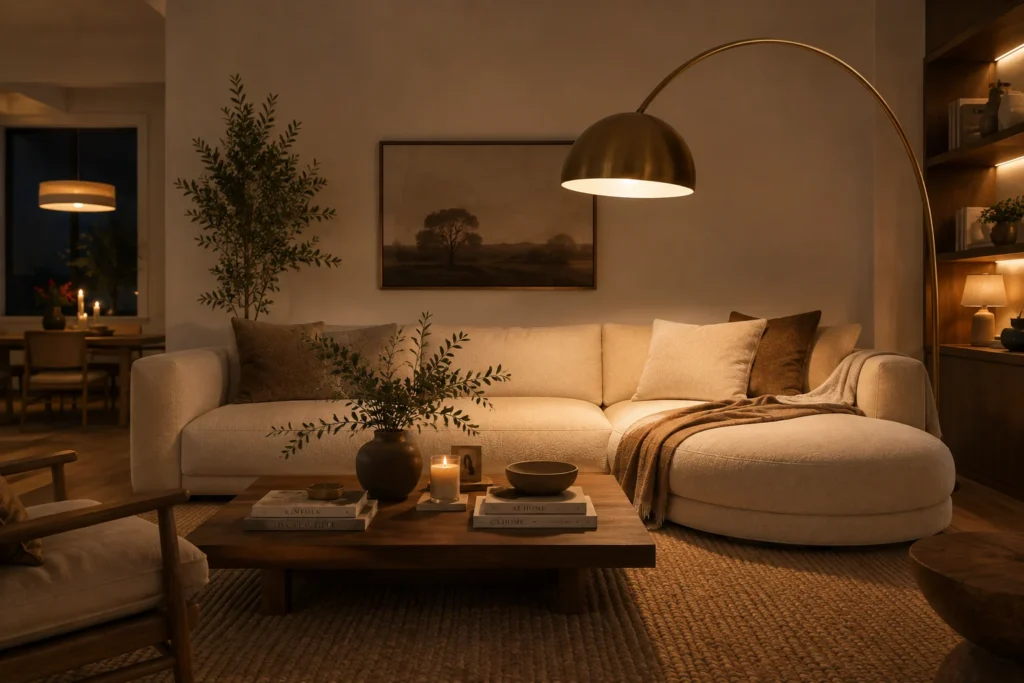
When ceiling heights prevent the installation of low-hanging pendants, an oversized arc floor lamp bridges the gap. Position the base behind a sofa corner and extend the curved neck directly over the coffee table. This technique anchors the seating arrangement without requiring hardwired overhead electrical work.
Pro Tip: Ensure the bottom rim of the shade rests between 60 and 66 inches from the finished floor to prevent direct bulb glare when seated.
2. Asymmetrical Wall Sconce Placement Over Seating
Ditch matching symmetrical wall fixtures in favor of deliberate asymmetry. Mount a single adjustable swing-arm brass sconce over one side of the sofa, balancing the opposite end with a low ceramic table lamp. This setup introduces varied heights and dynamic visual rhythm.
3. Backlit Architectural Joinery and Floating Media Consoles
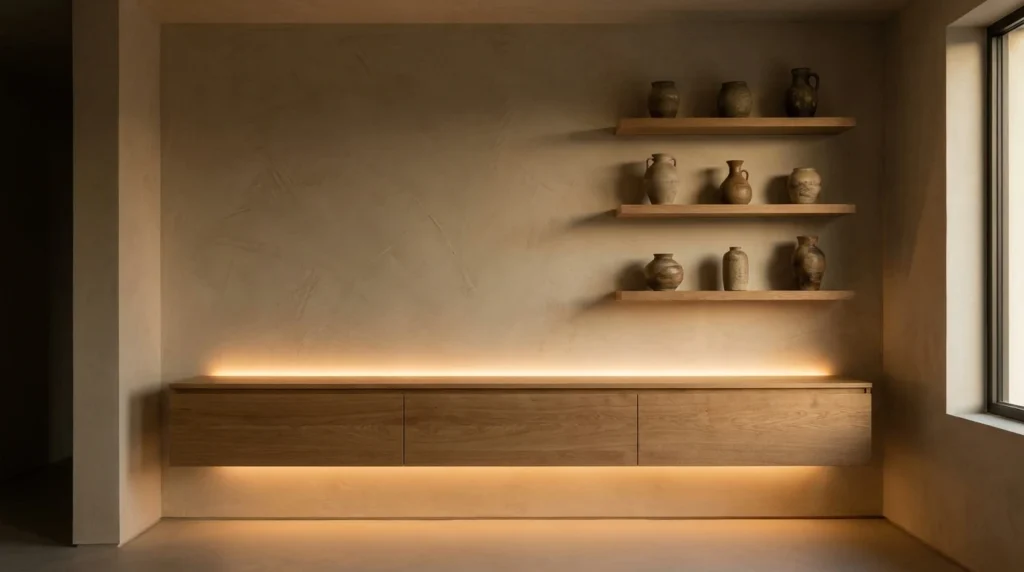
One of the most effective living room lighting ideas for modern spaces is continuous LED tape lighting behind built-ins. Install aluminum mounting channels with frosted diffusers along the back edges of open shelving or underneath a floating TV credenza. The indirect glow adds depth while softening harsh television screen contrast in dark rooms.
| Fixture Type | Ideal Placement | Recommended Lumens | Best Color Temp (Kelvin) |
| Arc Floor Lamp | Corner arched over coffee table | 800–1100 lm | 2700K (Warm White) |
| Reading Sconce | 30–36″ above sofa seat | 450–600 lm | 3000K (Soft White) |
| Joinery LED Strip | Under shelves / Behind TV | 200–400 lm/ft | 2400K–2700K |
| Pendant Fixture | Central ceiling / Above table | 1200–1800 lm | 2700K (Warm White) |
| Cordless Lamp | Side tables, deep bookshelves | 150–300 lm | 2200K–2700K (Dim-to-warm) |
4. Sculptural Paper Pendants for Soft Diffused Glow
Paper and woven fabric lanterns—such as classic Noguchi-style Akari designs—disperse light 360 degrees without harsh hotspots. Incorporating paper pendants into your living room lighting ideas softens modern minimalist lines and introduces tactile, organic texture.
5. Cordless Rechargeable Table Lamps on Bookshelves
Cord clutter instantly ruins an otherwise polished interior. Compact, rechargeable LED table lamps fit neatly into deep bookcase cubbies, mantelpieces, or narrow drink tables where wall outlets are out of reach. Look for touch-dimmable models featuring 2200K–2700K warm LED chips to replicate candlelight.
If you are styling side surfaces, check out our nightstand styling ideas for principles that apply equally well to living room end tables.
6. Low-Level Floor Uplighting Behind Large Houseplants
Placing a miniature canister uplight or an adjustable ground puck directly behind a tall indoor plant (like a Fiddle Leaf Fig or Bird of Paradise) casts dramatic botanical shadows upward across the ceiling. This adds an immediate focal point to unused corners.
7. Picture Lights Over Gallery Walls and Artwork
Turn a standard gallery wall into a curated museum display. Battery-operated or hardwired picture lights mounted 6 to 8 inches above canvas art provide crisp accent illumination. For broader wall curation, explore our bedroom wall decor ideas for layout templates.
8. Perimeter Cove LED Strips for Floating Ceilings
For homes with drop ceilings or crown molding, hidden perimeter cove lighting bounces soft illumination off the ceiling surface. This architectural touch makes low ceilings appear visually higher by eliminating perimeter shadows.
9. Dual Flush-Mount Modern Fixtures for Long Living Rooms
Narrow, elongated living rooms often struggle with dark ends when relying on a single central fixture. Installing two matching, architectural semi-flush mounts spaced evenly along the central ceiling axis provides uniform coverage without overwhelming vertical headspace.
10. Portable Plug-In Swing Arm Lamps Beside Reading Chairs
Renters unable to cut drywall can use plug-in wall sconces with decorative fabric cords. Secure the mounting bracket next to an accent armchair and secure the cord with brass cleats for an intentional, tailored look.
11. Low-Hanging Statement Chandeliers Anchoring the Coffee Table
If your ceiling height exceeds 9 feet, treat a central chandelier as functional art. Lowering the fixture so it hangs 7 feet above the floor immediately grounds open-concept living rooms and defines the primary conversation zone.
Technical Guide: Color Temperature, Lumens, and Placement
Executing successful living room lighting ideas requires pairing the right hardware with correct optical values:
- 2400K–2700K (Warm Incandescent Glow): Best for accent lamps, sconces, and evening wind-down zones.
- 3000K (Soft White): Best for reading corners and task illumination where color clarity matters.
- Avoid 4000K–5000K (Daylight Blue): Cool-spectrum lighting triggers alertness and feels sterile in residential gathering spaces.
Dimming capability is non-negotiable. Swap standard single-pole toggles for smart universal LED dimmers to effortlessly adjust light levels from daytime productivity to evening entertaining.
Common Living Room Lighting Mistakes to Avoid
- Relying Exclusively on Recessed Downlights: Creating a “swiss cheese” ceiling with recessed cans causes downward glare and unflattering vertical shadows.
- Ignoring Scale: A tiny light fixture in an expansive seating area visually shrinks the room, while an oversized fixture in a compact space overwhelms the layout.
- Mismatched Color Temperatures: Mixing a 5000K cool-white floor lamp with a 2700K warm-white ceiling pendant creates jarring, disjointed light tones.
Conclusion: Crafting Your Perfect Illuminated Living Space
Selecting the right living room lighting ideas comes down to balancing function, scale, and warmth. By layering ambient overhead diffusion, functional reading lights, and low-level accent glows, you create a space that effortlessly adapts to every moment of the day.
4. FREQUENTLY ASKED QUESTIONS
What is the best color temperature for living room lighting ideas?
The optimal color temperature for living rooms is 2700K (Warm White). It emits a soft, inviting golden-white tone that promotes relaxation while preserving natural skin tones and textile textures. For dedicated reading nooks, 3000K (Soft White) offers sharper contrast without feeling clinical.
How many lumens do I need for living room lighting ideas?
A standard living room needs roughly 1,500 to 3,000 total lumens across all combined light sources. Aim for 10 to 20 lumens per square foot for ambient lighting and 30 to 50 lumens per square foot at dedicated task stations.
How can I add living room lighting ideas without hardwiring?
Use plug-in wall sconces with cord covers, arc floor lamps, battery-powered picture lights, and rechargeable LED puck lights or cordless table lamps on shelving to layer light without cutting drywall.
Where should lamps be placed in living room lighting ideas?
Place lamps at varied heights throughout the room: an eye-level table lamp beside the sofa, a tall floor lamp in an opposite corner, and low accent lighting within bookcases or on the media console to eliminate dark corners.
[…] you’ve been searching for vintage botanical gallery wall ideas, you’re probably after the same thing most of us are a home that feels warm, layered, and […]