



Selecting the right paint color can completely alter the emotional resonance of your sleeping quarters. An uninspired choice can leave a room feeling cold or cramped, while an intentional palette transforms ordinary walls into a restorative haven. Navigating current bedroom color ideas involves balancing your personal aesthetic with how light interacts with hues throughout different times of the day.
Whether you want to revive a compact guest room or establish a serene primary suite, these designer-approved bedroom color ideas offer versatile inspiration across neutral, moody, and nature-inspired palettes.
How to Choose the Right Bedroom Paint Color
Before purchasing gallons of paint, understanding two fundamental color physics concepts ensures you avoid costly color mistakes:
Understanding LRV (Light Reflectance Value)
LRV measures the percentage of light a paint color reflects on a scale from 0 (absolute black) to 100 (pure reflective white). For small bedrooms, choose colors with an LRV between 60 and 80 to bounce natural daylight around the room. For cozy, cave-like moody spaces, select shades with an LRV under 20.
Testing Paint Samples in Different Lighting Conditions
Never select a color from a tiny paper swatch alone. Paint large 2×2-foot swatches on two opposing walls and observe how morning light, harsh afternoon glare, and evening artificial bulbs shift the undertones over 24 hours.
Pro Tip: Color choices look completely different depending on your illumination setup. Review our bedroom lighting ideas to ensure 2700K warm bulbs complement your chosen paint undertones.
27 Designer-Approved Bedroom Color Ideas
1. Soft Alabaster White for Airy Minimalism
A warm, creamy alabaster white reflects natural sunlight without feeling sterile or hospital-grade. It serves as an adaptable backdrop for natural wood furniture and textured linens.
Pro Tip: Keep bright white spaces from feeling flat by introducing tactile layers. Explore our cozy neutral bedroom ideas to style alabaster walls effectively.
2. Muted Sage Green for Natural Serenity
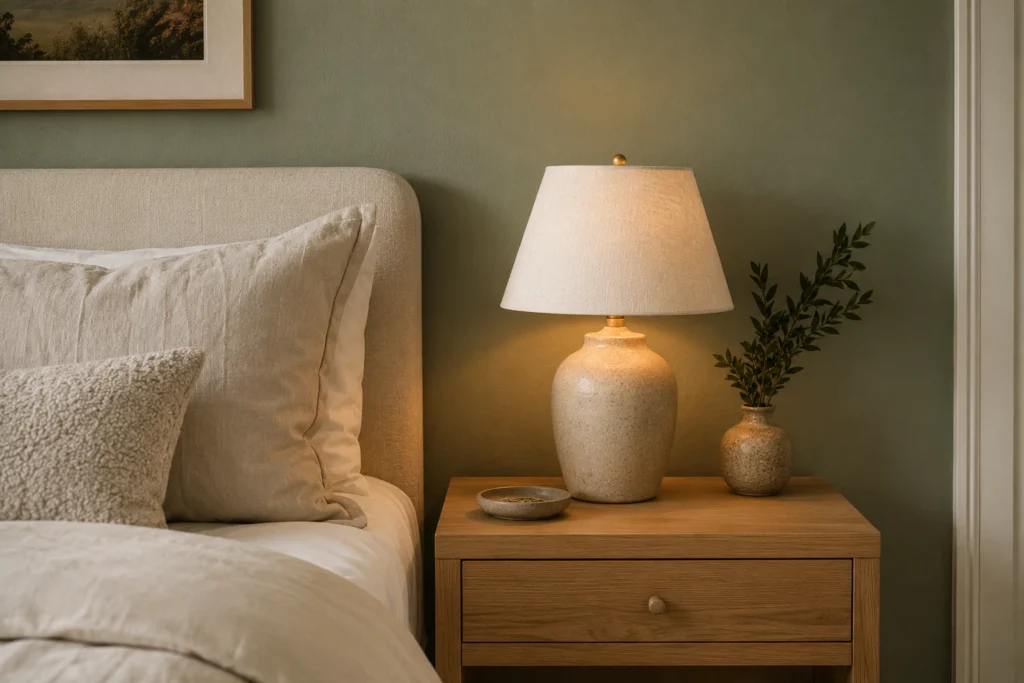
Sage green acts as a neutral from nature. Its low saturation level introduces organic calm without overwhelming compact spaces, pairing exceptionally well with oak wood tones.
3. Warm Oatmeal and Biscuit for Cozy Neutrality
Shades of oatmeal and biscuit feature warm yellow-beige undertones that make north-facing rooms feel instantly sunlit, welcoming, and wrapped in comfort.
4. Deep Moody Charcoal Gray for Dramatic Depth
Charcoal gray absorbs ambient light, creating an intimate, cocoon-like sleeping environment that promotes deep rest and dramatic visual sophistication.
5. Dusty Terracotta for Earthy Warmth
Dusty terracotta brings baked earth warmth indoors. It adds sun-washed character without leaning overly bright, working wonderfully on an accent wall behind a headboard.
6. Pale French Blue for Restful Sleep
Psychological studies indicate blue is one of the most effective colors for reducing heart rate and promoting sleep. A soft, dusty French blue feels classic and serene.
7. Rich Forest Green for a Woodland Sanctuary
Deep forest green mimics the canopy of tall trees, providing a grounding, organic atmosphere that pairs seamlessly with vintage brass hardware and leather accents.
8. Warm Greige for Transitional Balance
Greige—a seamless hybrid of gray and beige—bridges the gap between cool modern aesthetics and warm traditional comfort, making it a reliable choice for any room orientation.
9. Muted Olive Green for Subtle Organic Depth
Slightly darker and earthier than sage, olive green introduces sophisticated vintage character to small bedrooms when paired with crisp white trim.
10. Soft Buttercream Yellow for Morning Light
Unlike bright primary yellows, a muted buttercream hue reflects gentle morning light, making dark, window-starved bedrooms feel cheerful and bright.
11. Dusty Rose for Gentle Romantic Warmth
A desaturated, earthy dusty rose provides a sophisticated touch of pink that reads as a neutral rather than a nursery pastel, adding subtle warmth to walls.
12. Deep Navy Blue for Classic Sophistication
Navy blue is a timeless alternative to black. It creates a crisp, tailored backdrop that anchors white bedding, brass fixtures, and natural jute textures.
13. Warm Taupe for Timeless Elegance
Taupe combines gray and brown undertones to produce a rich, quiet neutral that feels grounded, calm, and effortlessly high-end.
14. Ethereal Fog Gray for Cool Balance
If your bedroom receives intense southern sunlight, a pale fog gray with cool blue-green undertones helps balance the warmth of the room.
15. Warm Caramel Brown for Rich Coziness
Caramel brown envelops the room in a rich, buttery embrace. It adds sophisticated depth that looks stunning when paired with cream textiles and black iron accents.
16. Muted Lavender for Calming Relaxation
A sophisticated, gray-infused lavender is far from childish. It introduces a whisper of violet that soothes the senses at the end of a long day.
17. Crisp Paper White for Architectural Canvas
If you want to highlight statement furniture, artwork, or intricate crown molding, pure paper white provides an uncompromised, clean architectural canvas.
18. Soft Mushroom Gray for Earthy Sophistication
Mushroom gray leans into organic brown undertones, offering a softer, earthier alternative to standard industrial grays.
19. Deep Plum for Moody Elegance
Rich plum brings royal, moody warmth to a master suite. It creates an enveloping, dramatic sanctuary when paired with velvet textures and dim lighting.
20. Warm Sand for Coastal-Inspired Calm
Warm sand hues mimic sun-bleached shores, bringing breezy, effortless coastal tranquility into your sleeping space without feeling themed.
21. Slate Blue for Moody Coastal Vibes
Slate blue offers a heavier, stormier interpretation of blue, adding grounded coastal atmosphere that pairs well with weathered driftwood and crisp whites.
22. Muted Clay for Warm Southwestern Comfort
Clay paint shades introduce sunbaked mineral warmth, transforming a standard box room into an earthy, meditative retreat.
23. Pale Mint for Fresh Morning Energy
A whisper-light mint green offers a crisp, clean aesthetic that feels refreshing and uplifting during morning routines.
24. Rich Espresso Brown for Grounded Cocooning
Espresso brown acts as a dramatic, enveloping dark neutral that makes high ceilings feel intimate and cozy.
25. Warm Wheat for Golden Hour Radiance
Wheat yellow-beige captures the feeling of late afternoon sunlight, keeping rooms feeling warm and inviting even on overcast days.
26. Dusty Teal for Balanced Cool and Warm Tones
Dusty teal bridges blue and green with a gray base, creating a dynamic, soothing hue that shifts subtly under changing daylight.
27. Monochromatic Tone-on-Tone Layering
Instead of picking a single wall color, many top bedroom color ideas focus on painting walls, baseboards, and doors the exact same matte shade for seamless spatial expansion.
Pro Tip: Once your walls are freshly painted, ensure your overall furniture layout and floor coverings maintain balanced proportions. Consult our bedroom rug size guide to anchor your newly styled room.
According to research published by the Illuminating Engineering Society, matching paint LRV levels with appropriate color temperatures prevents surface glare and enhances the psychological comfort of residential interiors.
Matching Paint Finishes to Bedroom Lighting
Selecting the correct paint finish is just as important as choosing the color:
- Matte / Flat Finish: Absorbs light best, hiding wall imperfections. Ideal for low-traffic bedroom walls and ceilings.
- Eggshell / Satin Finish: Offers a soft, washable subtle sheen that bounces a minimal amount of light, perfect for primary bedrooms.
- Semi-Gloss: Best reserved strictly for baseboards, crown molding, and doors to withstand daily wear and tear.
Frequently Asked Questions
What are the best bedroom color ideas for better sleep?
Calming, desaturated colors like muted sage green, dusty French blue, warm oatmeal, and soft taupe promote relaxation and lower heart rates, making them ideal for sleep.
What paint colors make a small bedroom look bigger?
High-LRV light neutrals such as soft alabaster white, pale fog gray, and warm biscuit reflect natural light, visually expanding the boundaries of compact rooms.
Should the ceiling match the bedroom wall color?
Yes. Painting the ceiling the same color as the walls (often in a flat finish) blurs boundary lines, creating an enveloping, cozy cocoon effect that makes low ceilings feel intentional.
How do I test bedroom paint colors properly?
Paint large sample boards or direct wall patches at least 2×2 feet in size. Observe how the color shifts from morning daylight to evening artificial lighting over 48 hours before buying full gallons.