


There is nothing quite as frustrating as kneeling on cold kitchen tile with a flashlight, moving five cans of tomato sauce out of the way just to find a jar of bay leaves hidden in the back of a dark, 24-inch cabinet.
Traditional deep shelves work against small-space living: they force you to store items two or three layers deep, guaranteeing that the rear half of your cabinet becomes a graveyard of duplicate spices and expired grains. Adopting functional pull out pantry ideas for small kitchen storage changes everything. By bringing the entire contents of the cabinet outward into natural ambient light, slide-out mechanisms eliminate forgotten dead zones and unlock storage you did not know existed.
Why Traditional Shelves Fail (And Why Pull-Outs Win)
When you convert stationary shelves into gliding systems, you switch from horizontal searching to top-down visibility. Rather than reaching past front-row obstacles, pull-out storage lets you view the entire inventory from both sides at once. This single shift stops you from purchasing duplicate ingredients, preserves your lower back, and allows you to pack items tightly without sacrificing daily accessibility.
8 Proven Pull Out Pantry Ideas For Small Kitchen Storage
1. The Ultra-Narrow Base Cabinet Slide-Out (3 to 6 Inches)
Filler strips and narrow gaps between your stove and base cabinets are often capped with decorative wood panels. You can swap that dead panel for a 3- to 6-inch vertical slide-out rack. Lined with chrome rails, this vertical pull-out holds two or three tiers of baking spices, vinegars, and cooking oils directly next to your meal prep zone.
2. Retrofit Roll-Out Wooden Trays for Existing Deep Shelves
You do not need to tear down existing cabinetry to enjoy slide-out access. Measure the internal width of your standard base cabinets and install pre-built wooden roll-out trays directly onto your existing shelf pins. Look for trays with 3-inch dovetail wooden sidewalls to prevent glass jars from tipping outward when you pull the drawer forward quickly.
3. Full-Height Vertical Glide-Out Larders
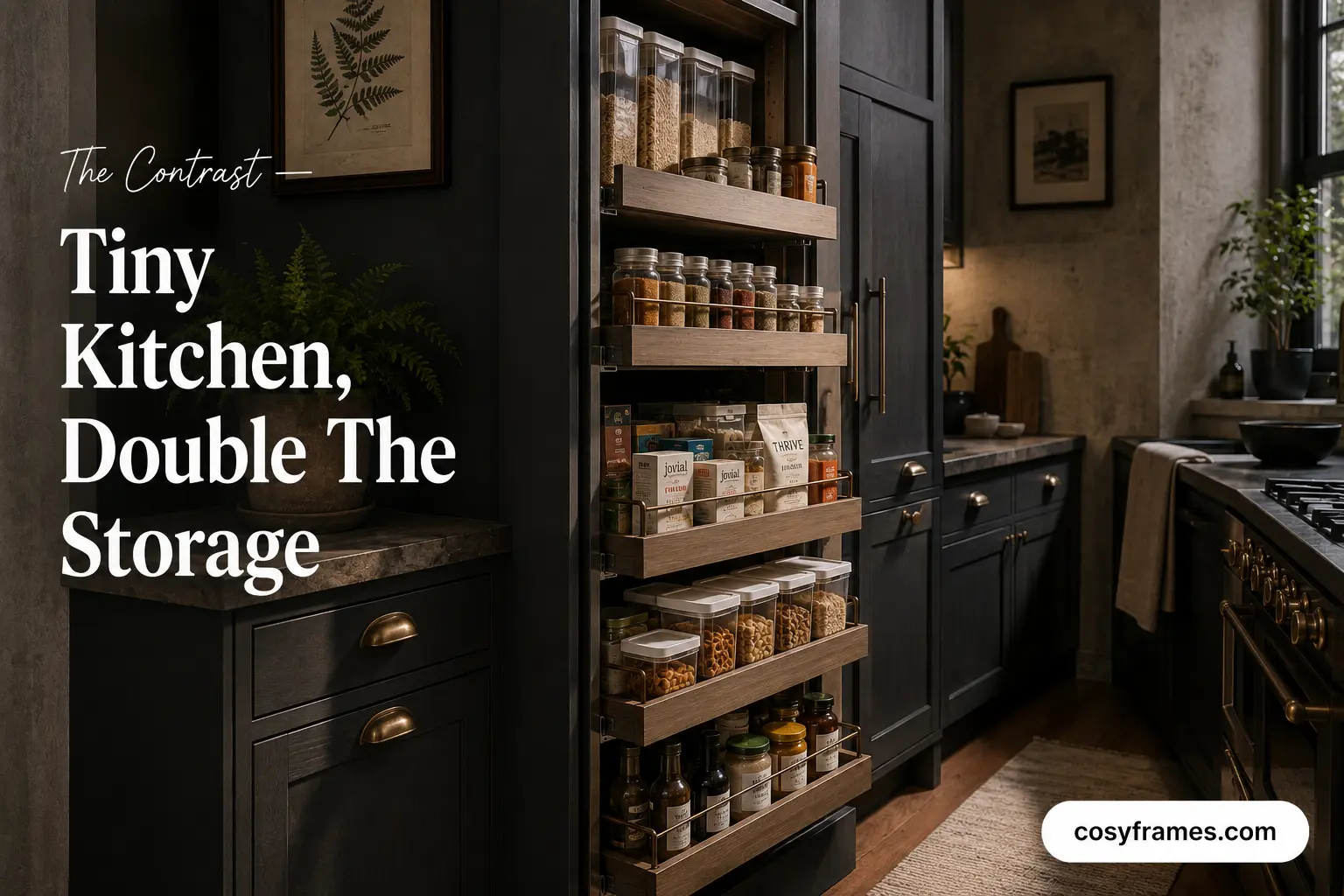
If you have an 8- to 12-inch wide gap next to your refrigerator, a floor-to-ceiling pull-out larder delivers enormous storage capacity. Built with five or six adjustable wire or acrylic tiers, the entire vertical tower slides out as a single unit on heavy-duty base runners. You can access breakfast cereals, baking canisters, and canned goods from both left and right sides.
4. Articulating Blind Corner “Magic” Pull-Out Shelves
Blind corners—where two cabinet runs meet at a 90-degree angle—waste an enormous amount of usable square footage. Articulating pull-out mechanisms use an interconnected track system: as you pull open the door, the front two baskets swing outward into the room, smoothly pulling the hidden rear baskets into the front position.
5. Adhesive Pull-Out Drawer Organizers for Renters (Zero Screws)
Renters often cannot drill pilot holes into melamine shelves to mount steel drawer runners. Heavy-duty adhesive pull-out drawers solve this dilemma. Using industrial-grade nano-adhesive rails, these clear acrylic or carbon-steel bins bond directly to existing cabinet surfaces. They support up to 25 pounds of canned goods and peel away cleanly with a hairdryer when your lease ends.
6. Two-Tiered Under-Sink Slide-Out Organizers
The space under the kitchen sink is notoriously chaotic due to drain pipes and garbage disposals. L-shaped sliding metal organizers feature a narrow top tier that clears plumbing pipes, paired with a wide bottom roll-out drawer. Use this bottom sliding bin to keep dish tabs, overflow cleaning sprays, and scrub sponges organized without knocking over bottles.
7. Vertical Pull-Out Pegboard Panels for Utensils and Spices
Instead of horizontal shelves, install a vertical sheet of heavy-duty metal pegboard mounted on top-and-bottom drawer slides. Attach hooks and shallow metal baskets to the pegboard surface. This allows you to hang awkward items such as ladles, rolling pins, measuring cups, and frying pans flat in a space no wider than eight inches.
8. Pull-Out Wire Basket Bins for Root Vegetables
Potatoes, onions, and garlic need continuous airflow to prevent early rotting, making sealed drawers a poor storage choice. Replace a lower stationary shelf with pull-out wire or steel mesh baskets on smooth runners. The open mesh allows ambient air to circulate around produce while keeping dirt crumbs contained over an easily wiped bottom tray.
Hardware Matters: Choosing Slides That Won’t Sag Under Weight
The success of any pull-out pantry depends entirely on the mechanical runner hardware beneath it:
- Full-Extension Ball-Bearing Slides: Never buy 3/4 extension slides. A 3/4 slide leaves the rear six inches of the drawer hidden inside the cabinet box, defeating the purpose of the project. Always demand full-extension slides that bring the entire tray past the cabinet face frame.
- Weight Ratings: A drawer loaded with canned beans, heavy glass jars, and sacks of flour gets heavy quickly. Choose slides rated for at least 75 to 100 pounds static load.
- Soft-Close Dampers: Without soft-close mechanisms, sliding pantry drawers bounce abruptly against the back wall when pushed shut, causing tall bottles of olive oil and glass jars to rattle, tip, and shatter.
Common Mistakes When Installing Pull-Out Pantry Systems
- Forgetting Door Hinge Clearance: When measuring cabinet width, you must measure the clear opening between the open door hinge and the opposite frame, not the internal cabinet wall. If your drawer slides are mounted flush to the sidewall, the tray will slam into the protruding door hinge.
- Overloading Front Baskets: On tall pull-out larders, placing all your heavy canned goods on the front of the frame tilts the center of gravity, causing premature runner wear. Keep heavy items low and toward the rear of the carriage.
- Ignoring Container Heights: Check the distance between your pull-out shelves before mounting them in place. Ensure you have at least 11 inches of clearance on at least one tier for tall cereal boxes and olive oil dispensers.
Simple Organization Routines for Slide-Out Pantries
To keep your pull out pantry ideas for small kitchen storage operating smoothly, line every sliding basket with ribbed, non-skid shelf liners. This prevents plastic canisters and glass jars from sliding backward whenever the drawer is extended quickly.
Group your pull-out drawers by meal sequence: dedicate one sliding tray to breakfast staples, the middle tier to quick weeknight dinner grains, and the lowest pull-out basket to heavy backstock cans. Once every item has a fixed, gliding home, your small kitchen will feel twice as large.
FAQ
Can you add pull-out shelves to existing kitchen cabinets?
Yes. You can easily retrofit existing cabinets by purchasing pre-assembled wooden or wire pull-out trays and mounting their bottom tracks directly to your current cabinet base or sturdy fixed shelves using basic wood screws.
What is the minimum width needed for a pull-out kitchen pantry?
Functional pull-out storage can be installed in spaces as narrow as 3 to 4 inches for single-column spice and oil racks. For boxed dry goods, cereal, and canned food, a width of 8 to 12 inches is ideal.
How much weight can a standard kitchen pull-out pantry hold?
Standard residential pull-out drawers mounted on quality ball-bearing slides hold between 50 and 75 pounds. Commercial-grade or floor-mounted vertical larders can support 100 to 150 pounds of canned and bulk goods without bowing.
Are pull-out pantries renter-friendly?
Yes. Renters can use zero-tool adhesive pull-out drawers that stick to shelves with heavy-duty nano tape, or freestanding rolling slim carts that slide into open gaps between appliances without drilling into walls.
How do I measure my cabinets for retrofit pull-out shelves?
Measure the narrowest opening of your cabinet door frame from side to side (accounting for hinges), the usable interior depth from front to back, and the total interior height. Base your sliding organizer purchase on the door opening width rather than the wider interior wall dimension.